Showing posts with label design and architecture. Show all posts

What is the best building in Copenhagen? What is the ugliest? Check out Episode #47 of MyDenmarkTV.com to find out

Another great episode of MyDenmarkTV.com is up - episode #47. This time we took to the streets to find get some opinions about the best and worst buildings in Copenhagen. Interestingly, there was many people directly contradicted each other by naming the same buildings as the most ugly and beautiful. Of course, we weren't looking for random unknown buildings. We were looking for known and prominent buildings that provoke a reaction - which is exactly what we got. Enjoy!

Episode #47 - MyDenmarkTV.com from MyDenmarkTV on Vimeo.

This is not a real estate prospectus...


If you are familiar with Copenhagen, you may recognise that there is something notable in this picture. It's taken coming down towards the Amerikakaj/Dampfærgevej area of the city (where the Oslo ferry arrives shortly after 9 each morning, and departs at 5pm sharp every afternoon).

You see, there are relatively few buildings in Copenhagen - residential or commercial - that exceed 5-6 stories in height. Sure they do exist, but in comparison to most major cities there just aren't that many. This is one of them - it's a brand new development I think it's worth singling out for some attention for it's excellent architectural design.

While industrial and commercial architecture in Copenhagen all too often leaves something to be desired, the same cannot always be said of residential construction projects, of which there have been a few of note over the past years. On my way to and from work every day, I pass by this one - it's actually two buildings. Unfortunately, the location and surroundings leave much to be desired, since it is situated by a very major traffic artery filled with noisy rigs and large trucks. On the other hand, if you have one of the upper floor apartments in the high rise building, it comes with a great view of the channel.


Nonetheless, fantastic design in my humble opinion.


Complete with balconies - all too rare in Copenhagen, though they have been dramatically increasing in popularity in recent years, with plenty being added to existing old (often very old) buildings every year.


The area of Dampfærgevej/Parkhusvej/Amerika Plads is largely a commercial area, with lots of offices, but in the past few years a number of new apartment buildings have sprung up. If you like being close to the city, but are fine with having few of the normal amendments just outside your door that typically come with urban living - such as a variety of interesting shops, restaurants and cafes (not to mention people), it's an area worth considering. It's not quite for me, though it's quite a nice area in which to work, I can tell you.


And with the real estate market around Copenhagen (and much of the rest of Denmark) having hit the skids, there are plenty of units still available if you like what you see...and you could probably swing a great deal for one, the way things are going.


no shortage of for sale signs...

Sjaelland's Odde: The smell of sea air, all the fish you could want...and a bit of Danish design history

by: Tim Anderson (timothyanderson2005@gmail.com)


The lack of mountains in Denmark has always been a minor point of contention for me (or as one friend of mine put it, 'a real country has mountains'). That said, a 'real country' should also have sea - preferably a lot of it. And Denmark certainly has that.

There are no shortage of places in Denmark to get a good look at it - along with a whiff of deliciously salty sea air.

On the other hand as you watch the sea someplace or other in Denmark, if you are hungry, haven't brought your own lunch and are looking for more than a questionable Danish pølser (hot dog) to fill your stomach with as the sea breeze sweeps through your hair, well, the choices do drop off a bit.

However, one option that can be counted on, would be Odden Havn (Odden Harbour) up on Sjællands Odde. It's not quite
just another of the charming but countless Danish harbour towns that exist.

Aside from the pleasant harbour, as home to unpretentious
Odden Fisk (Odde Fish), a wonderfully designed pier to wander along, and being only stone's throw (if you've got a good arm...) from one of Denmark's famous design relics - the fiskerøgeri (fish smoke house) from 1943 of (deceased) Danish designer Arne Jacobsen - it makes for a pleasant afternoon car trip.


the exterior doesn't give a hint of the magnificent fish and fish dishes being sold inside...


maybe the funkiest pier in Denmark...walking encouraged naturally


Arne Jacobsen's iconic smoked fish factory today...


Arne's smoke house back in the day (circa 1943)

And the scenery around Sjaellands Odde is well worth the drive, at least on a sunny day.


an iconic image of Denmark...

But oh, those tasty fish! And it's most definitely a place to stop if you're on your way to the ferry to Jutland, the one departing from the tip of Sjaellands Odde.


The varied faces of Christiania

by: Tim Anderson (timothyanderson2005@gmail.com)


It's time to return to the subject of Christiania, the 'hippy enclave' in Copenhagen that has existed since the early 1970's. Since writing the last article about Christiania for this blog over two years ago, Getting the Christiania vibe...or not, plenty has happened, though little has changed.

Christiania hit the news once again last week, thanks to the actions of the police who moved in unannounced to knock down an abandoned building there. To be clear about my view on things, there are a few occasions when police presence is required in Christiania. Probably about 5% of the occasions when they actually show up there.

It's good business for the police, at the behest of the authorities who give the orders, to carry out these sorts of muscle-flexing actions - show up and tear something down - since it tends to provoke a few locals, along with the various outsiders who take an interest in these things (and in particular the ones always eager for a chance to perpetrate various violent activities in the name of protest). This in turn give the police and the relevant authorities a justification for the continual (and otherwise purposeless) patrols of the area, and the rather significant chunk of change spent on them. Because without such actions, more people around Copenhagen might
be inclined to question whether this was really the best use of budget money.

At least all that budget money spent over the past 3 years by the police patrolling Christiania hasn't been entirely misspent. The police have managed to attain the distinction of being basically the greatest (and most consistent and persistent) causers of unwelcome nuisance and disturbances in Christiania over this period of time. Call it a success, or just call it irony.

The residents of Christiania gamely battle on, as they have for over 30 years. Is there something worth protecting in Christiania? Is it really just a bunch of aging hippy squatters hanging on to a dying dream? There certainly is more to Christiania then first meets the eye.

While most outsiders, like myself, tend to see Christiania as a fairly cohesive collective of hippy types (and indeed this is how the residents are typically portrayed in the media), this description doesn't really stand up to a cursory stroll through the area.

Above all, it is easy to forget just how many families call Christiania home. Christiania is filled with families. Children of all ages can be seen running and cycling around, playing in gardens and so on. They seem pretty content and I would posit they have a pretty good life. So while it's easy to imagine Christiania as a bunch of long-term squatters, this stop being the case long ago. When hundreds and hundreds of people have invested decades building and maintaining the area, any pre-existing land claims - in this case government land that was abandoned over 30 years ago - become rather tenuous.


30 years of care: roof and window repairs in Christiania...


bikes and toys and lots of space - the perfect place for a family...

Christiania is really like a small city within Copenhagen, a city with its own distinct areas, each distinct from the others. Because Christiania can seem like such an incoherent and rather unkept place, it's easy to overlook the subtle and not-so-subtle differences that lie within.


there's treasure in that trash...um, maybe

The central part of Christiania is the commercial center. It's a relatively busy place - chaotic and full of diversity - particularly on sunny days and weekends. There is plenty of activity - restaurants, cafes, nightclubs, shops, museums, even a sauna, and much more.


the local vegetarian restaurant at Christiania - an excellent place for a simple, tasty meal

And, of course, there are the drug dealers selling hash and marijuana. Here one also finds a lot of people hanging around who just seem to be there because they really have nowhere else to go and nothing else to do. I suspect for many residents of Christiania, the central area is not a place they spend much time. Furthermore, I'm also suspect that many residents feel they have little in common with those who frequent and inhabit this part of town. But this is only a hunch.

Just like most urban centers, the commercial center of Christiania is not only for business - the density of residents living in this central area is relatively high, as well, as the housing mostly consists of small apartments in multi-story apartment buildings.


urban apartment dwellers...


and more apartments...


The way of life in the central area of Christiania is in total contrast to that of those living in the outlying areas. Or if you prefer, the more 'suberban' areas of Christiania.

Moving away from the central area of town, quickly the apartment blocks give way to one or two stories buildings and individual houses. There is still not a
lot of personal garden space to be had, but at least there is garden space. It's more then most living elsewhere in Copenhagen have. Those living in these areas of Christiania are nonetheless within close striking distance of the central part of the area.


central living in Christiania...

Wandering further eastward, the area becomes more forested.


Here, most of the houses are close to the water, many with a view overlooking it. Those living here have significantly more peace, quiet and isolation then those in the more central areas of Christiania. Not coincidently, the most, ahem, idiosyncratic dwellings are found scattered along the paths. And it is also here that one can momentarily forget that a city called Copenhagen even exists.


'if the government ever takes our land, well, I'll just cut these ropes and float away'...


'...and I'll just take off into the heavens...'


'...maybe with him'.

Yes, even in socialist Christiania, there is are clear distinctions - not everybody can have the perfect piece of property for their home, some are luckier than others - depending upon what you're after, of course.


What is clearly evident that a good number of those living in Christiania have invested a hell of lot of time (and money) into their homes. And there are quite a few who haven't, as well.

In fact, Christiania is divided into two distinct parts. All that I have described until now would be one half - let's call it the mainland. The second half lies across the channel, linked by bridge with this mainland area. In this area, though there is much more space, groups houses tend to be clustered together. That is, what can be seen is several small sub-communities that lie
within Christiania itself.


almost like a small town, set away from the bustle of the center...


you'd better like your neighbour, or get to pretty quickly...

While example of such sub-comminuties are evident all over Christiania, what is distinct about those found in the most eastern areas on the far side of the channel is the degree of isolation they have from the rest of Christiania. The area is incredibly calm and peaceful, with most dwellings overlooking the water. One gets the distinct impression that, if they chose, the residents in these areas need only rarely, if ever, show their face in the central areas of Christiania. While there are no cars to be found within Christiania, there is a parking area at the most eastern tip, meaning those living nearby can easily take their cars to work or drive to the various large supermarkets nearby in Amager (if they prefer this option to cycling).

Indeed, as one re-enters the central area of Christiania from these outlying areas, particularly on a warm and sunny day, one is immediately struck by all the noise and activity going on. It's quite a contrast to the tranquility of the outlying areas.

Square boxes, then and now...

by Tim Anderson (timothyanderson2005@gmail.com)

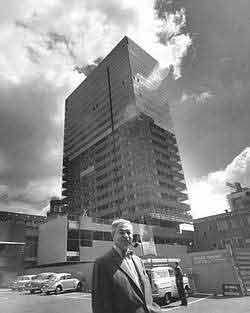
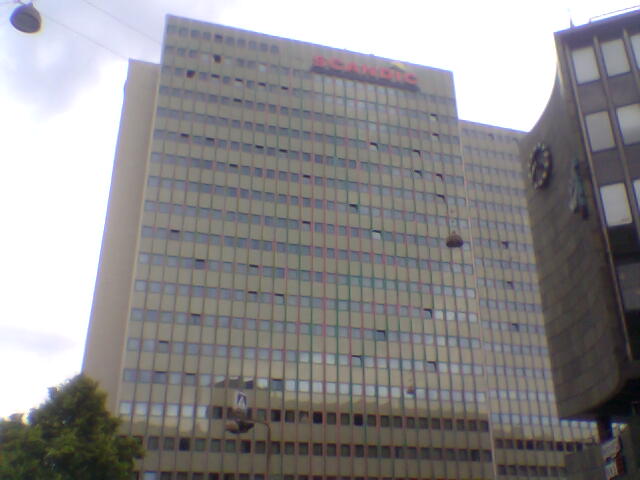
As irrelevant an issue as it may seem, I simply can’t resist offering my opinion regarding a classic discussion, the SAS Hotel in central Copenhagen designed by the legendary (and deceased) designer/architect Arne Jacobsen, source of much debate in Copenhagen over the years.

In Denmark, Arne Jacobsen is about as mainstream cult as one can possibly be. Even if his penchant for wearing bow ties created an aura of stiffness surrounding the man himself during his lifetime, most of his building and furniture designs pushed the boundaries of the time. There is no question that his influence lives on today in Denmark, particularly in Copenhagen - perhaps to a much greater extent than it should, some have suggested (after all, the man did most of his great work back in the 50’s and 60’s!).


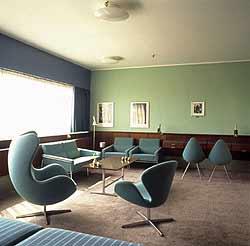
Jacobsen never feared being provocative; just consider the classic SAS Hotel in downtown Copenhagen that was entirely designed by the great man – the building itself and all of the interior furnishings. Though only one room (room 606, pictured) exists today with the original furnishings as selected and designed by Jacobsen intact, the image Jacobsen aspired to create lives on.

Debate about its exterior has never really ended, with opinion consistently split between those regarding it as brilliant (and very much ahead of it's time), and those less impressed who generally regard it as being dull (or worse). As history teeters towards myth (certainly the case in Denmark regarding anything involving Arne Jacobsen) and reality consequently becomes clouded, debate becomes more challenging.

However the SAS Hotel may have once seemed, and whatever the dissenting voices even today may whisper or shout, a quick glance at this industrial looking, army-green coloured box tells all you need to know – it is pretty ugly!


About the only thing remarkable about it's exterior at this point is the fact that it was designed by Jacobsen. Unfortunately this knowledge does nothing to improve the building's present-day appearance, though it may change one's perception of it, somewhat.

Discussion regarding this 60's building does matter, if only because so little has changed since that time. Though the building is unlikely to disappear anytime soon, new highrises continue to be built in Copenhagen, some with quite striking architecture, others less so.

Copenhagen, in spite of being the capital of Denmark and a fairly internationally oriented city, is not a place where the highrise building has ever really been embraced (ie. buildings higher than 10 stories). It's towering older brother, the skyscraper, even less so (ie. New York, Chicago or Toronto style).

In touring around Copenhagen (I would suggest a bicycle for the job) most buildings are no more than five to seven stories high, and very few more than ten stories - though there are a number around. Of those that exist, one may not be inclined to go as far as calling them ugly, however many would agree they are certainly not 'beautiful' in any most senses of the word. Perhaps uninspired would be a better term.

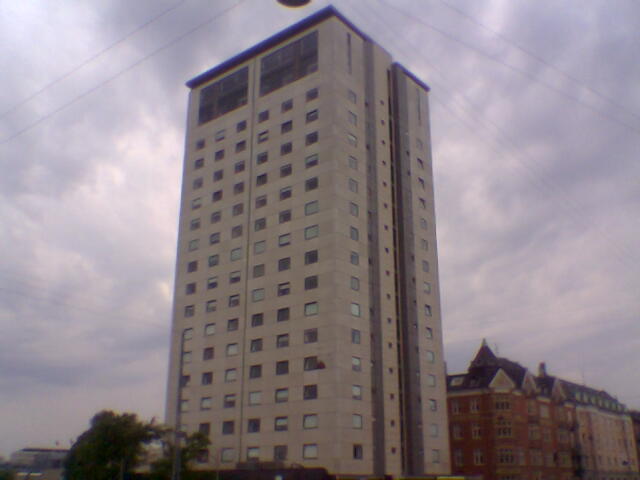
The very recently completed headquarters of Codan, a Danish insurance company.


In took a while to figure out what to do with this one, though it has recently been converted into a youth hostel.


Suffering from a little too much Arne Jacobsen influence?

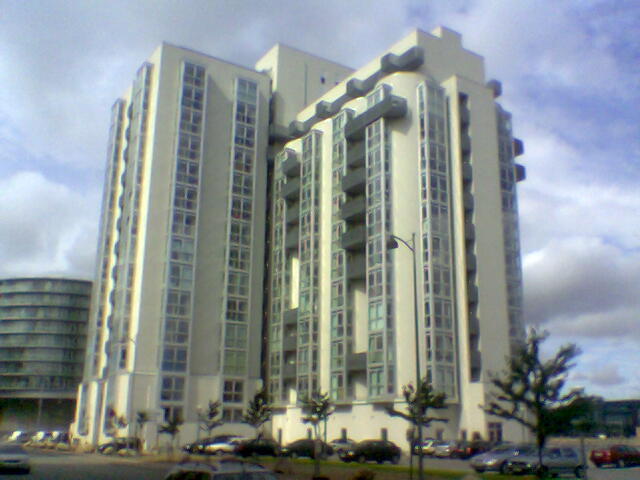
On the other hand, recent residential highrise buildings such as some old warehouse conversions at Islands Brygge, overlooking the channel, (pictured below) show a degree of flair, creativity and inspiration clearly absent in most of the existing commercial highrises. In any event, the debate will continue, and hopefully more inspired building such as these will continue to appear.


Powered by Blogger